
March is the time when many Indians in the USA start paying close attention to taxes. Employers send salary records. Banks send income statements. Universities send scholarship reports. Suddenly, you may see several forms that you do not fully understand. This happens to many people working or studying in the United States for the first time.
If you are on an H1B visa, an L1 visa, or an F1 visa, learning about these forms early can make tax season easier. Many immigrants begin by exploring trusted tax filing services that help people understand U.S. tax rules. With guidance from experienced tax consultants or a knowledgeable tax expert, filing taxes becomes a much smoother process.
This guide explains the important tax forms you may receive in March 2026 and how they affect your return. The goal is simple. Help you understand the system clearly so you can file your taxes with confidence.
Why March Is Important for Tax Filing
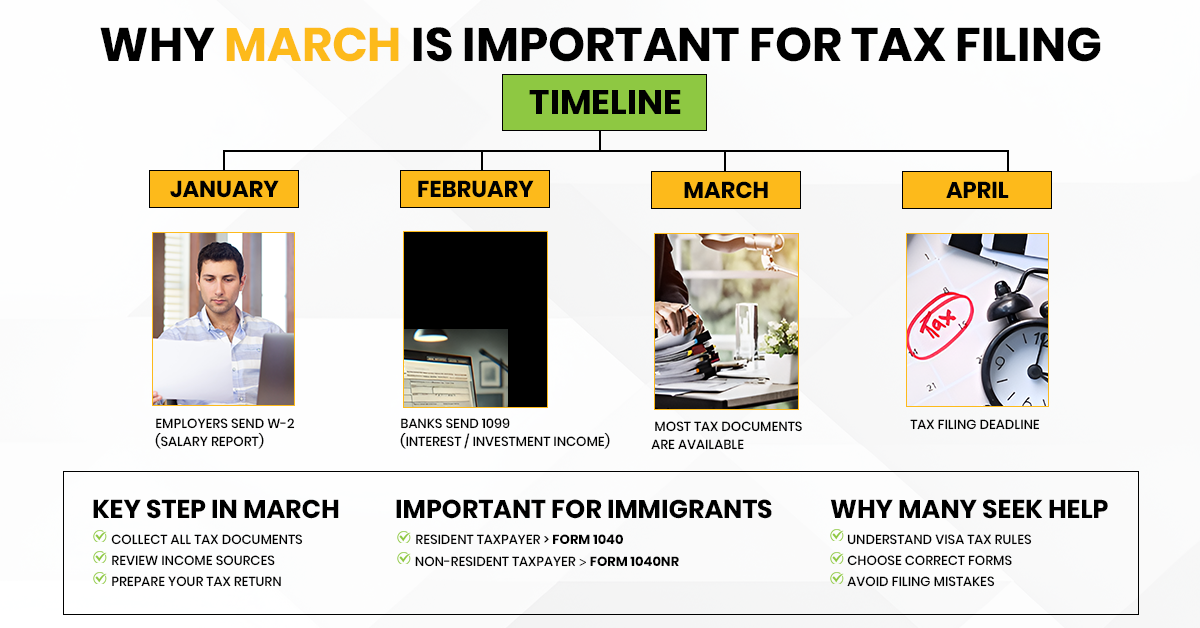
By the time March arrives, most taxpayers already have their income documents. Employers normally send salary forms in January. Banks send interest statements in February. Once March begins, you should have most documents needed to prepare your tax return.
The IRS explains the process on its official tax filing page.
For immigrants, the rules can be slightly different from what you may expect. Tax filing depends on residency status, visa type, and income source. Some people file as resident taxpayers while others file as nonresident taxpayers.
This difference is important because it determines which tax forms you must use.
Many individuals choose professional tax services so they can understand these rules without confusion.
Form W2 and Your Salary Income
If you worked in the United States during the year, your employer will send you a wage statement called Form W2.
This document shows your yearly salary and the amount of tax that was already withheld from your paycheck.
The IRS explains the form on the official Form W2 page.
The W2 includes several details such as federal income tax withheld, Social Security tax, and Medicare tax. For many H1B and L1 visa holders, this is the most important document used when preparing a tax return.
If you changed jobs during the year, you may receive more than one W2.
Every W2 must be included in your tax return.
Understanding this form clearly is the first step toward accurate tax filing.
Interest Income and Form 1099
Many people working in the United States earn interest from savings accounts. Banks report this income through Form 1099.
The IRS explains this document on the official Form 1099 page.
Even small amounts of interest must usually be reported on your tax return.
This sometimes surprises immigrants because interest reporting rules can be different in India.
If you have multiple bank accounts, you may receive more than one 1099 statement.
Learning how these forms work helps avoid mistakes during tax filing.
Form 1040 and Form 1040 NR
After gathering income documents, you prepare your main tax return.
Many resident taxpayers use the form explained on the Form 1040 page.
Nonresident taxpayers often use the form described on the Form 1040NR page.
Visa holders often wonder which form applies to them. The answer depends on tax residency rules.
If you meet the residency requirements, you may file Form 1040. If you are classified as a nonresident, you may need to file Form 1040NR.
Because these rules can be complex, many immigrants search for the best tax filing service that understands international tax situations.
Tax Residency Rules
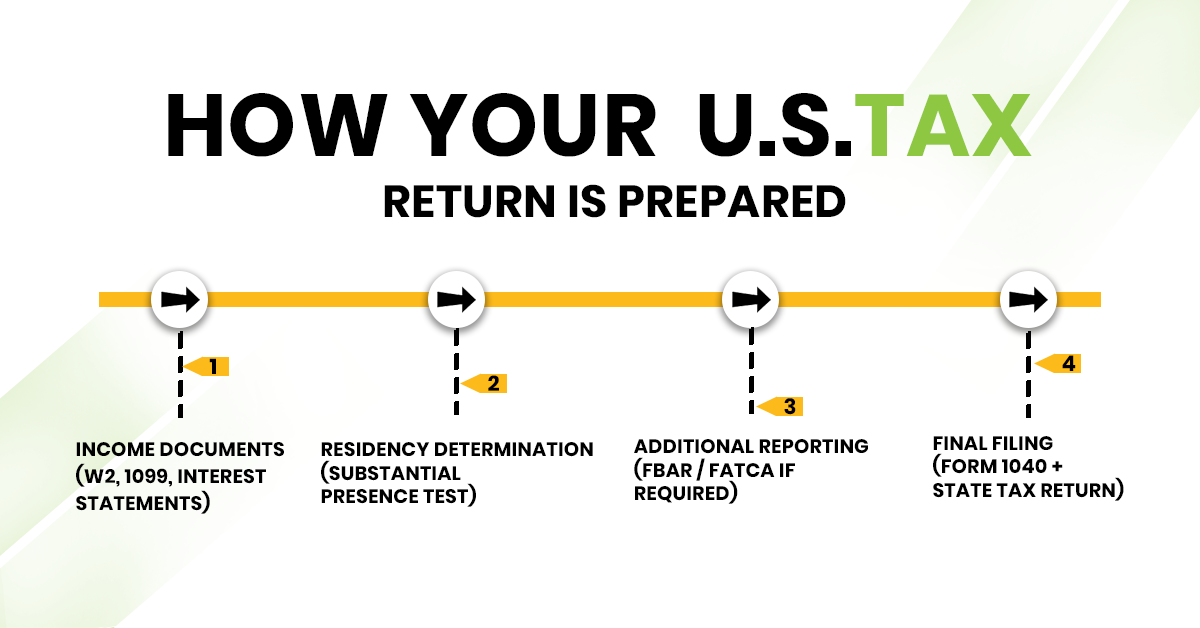
Tax residency does not always match immigration status. Instead, it is based on a rule called the substantial presence test.
The IRS explains this rule on the presence test page.
If you meet the test, you may be treated as a resident taxpayer. If you do not meet it, you may be treated as a nonresident taxpayer.
This difference affects how income is reported and which deductions are allowed.
A knowledgeable tax expert can help determine your correct filing status.
Forms for International Students
Students studying in the United States often have different tax requirements.
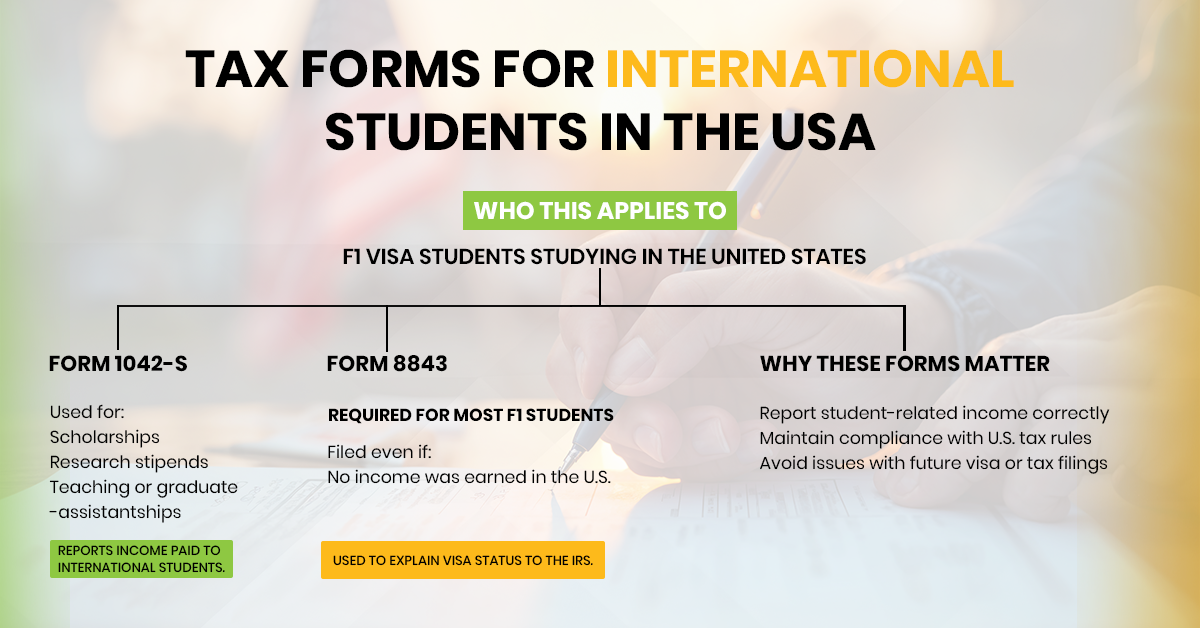
Many F1 students receive scholarships, research stipends, or assistantships. These payments may appear on Form 1042S.
The IRS explains this document on the official Form 1042S page.
Students may also need to file Form 8843.
Even students with no income sometimes submit this form.
The IRS instructions are explained on the Form 8843 page.
Understanding these forms helps international students remain compliant with U.S. tax rules.
Foreign Accounts and Reporting Rules
Many Indians in the USA maintain bank accounts or investments in India. These accounts may create additional reporting responsibilities.
Two important rules apply here.
The first rule involves FATCA reporting.
The IRS provides guidance on the FATCA rules page.
The second rule involves FBAR filing.
Information about this requirement is explained on the FBAR rules page.
If the value of foreign financial accounts crosses certain limits, these reports may be required.
Because these regulations involve international assets, many immigrants seek help from tax consultants who specialize in cross-border tax compliance.
State Tax Returns
Federal taxes are only one part of the process. Many states also require their own tax returns.
Each state has its own rules for income reporting.
If you worked in California, New York, New Jersey, or other states, you may need to file a state return in addition to your federal return.
State tax laws may differ from federal rules.
Understanding both systems helps ensure your tax return is complete.
Many immigrants look for the best tax filing service to handle both federal and state returns accurately.
Filing Deadlines
The standard filing deadline for most taxpayers falls in April.
If you cannot complete your return by the deadline, you may request additional time.
The IRS explains this option on the official extension form page.
An extension allows more time to file the return, but taxes owed must still be paid by the deadline.
Planning in March gives you enough time to review your documents carefully.
Common Mistakes During Tax Filing
Many immigrants make similar mistakes during their first few years in the United States.
Some people select the wrong residency status.
Others forget to report interest income.
Some taxpayers overlook FATCA reporting or FBAR filing requirements for foreign bank accounts.
These errors can lead to penalties or delays.
Working with experienced professional tax services can help avoid these problems.
Why Professional Guidance Helps
The American tax system includes several reporting rules that may not exist in other countries.
When you work with skilled tax consultants, you receive guidance tailored to your situation.
A qualified tax expert can review your documents, explain tax rules, and ensure your return is accurate.
For many Indians in the USA, professional support reduces confusion and helps avoid costly mistakes.
Reliable tax filing services also ensure that all forms are submitted correctly and on time.
Frequently Asked Questions
Do Indians on H1B, L1, or F1 visas need to file taxes in the United States
Yes. Most Indians in the USA who earn income must file a federal tax return. If you received salary income on a W2 form or contract income on a 1099 form, you usually need to report that income to the IRS. Even some students on F1 visas must submit certain forms even if they did not earn income.
What is the difference between W2 income and 1099 income
W2 income comes from employment, where the employer withholds taxes from your paycheck. A 1099 form usually reports income from freelance work, consulting, contract services, or investment income. Taxes are often not withheld from 1099 income, so the taxpayer is responsible for reporting and paying the correct tax amount.
When is the tax filing deadline in the United States
The federal tax filing deadline is usually in April. The IRS provides details on the official tax filing page. If you need more time, you may request an extension using the extension form provided by the IRS. However, any taxes owed must still be paid by the original deadline.
Do Indians in the USA need to report foreign bank accounts
Yes. Many individuals with financial accounts outside the United States must comply with FATCA reporting and FBAR filing rules. These requirements apply when foreign financial accounts exceed certain thresholds. These reports help the government track international financial assets.
What happens if you forget FBAR filing or FATCA reporting
Missing these reports can lead to penalties. The requirements apply even if no tax is owed on the foreign accounts. This is why many individuals consult a tax expert or experienced tax consultants who understand international tax reporting rules.
Should Indians use professional tax services in the United States
Many immigrants choose professional tax services because the U.S. tax system has rules that are different from those in other countries. Working with a knowledgeable tax expert helps ensure that income is reported correctly and all required forms are filed.
How do you choose the best tax filing service?
The best tax filing service is usually one that understands international tax rules and the needs of immigrants. Services that regularly assist Indians in the USA are often better equipped to handle visa-related tax situations, foreign income reporting, and international financial disclosures.
Final Thoughts
Tax season can feel overwhelming at first, especially for immigrants adjusting to a new system. However, understanding the key forms and deadlines makes the process much easier.
When you organize your documents in March and learn how each form works, filing your tax return becomes a straightforward task.
Many people rely on experienced tax filing services that specialize in helping Indians living and working in the United States. With guidance from trusted tax consultants, skilled tax experts, and reliable professional tax services, you can complete your tax filing with confidence and focus on building your future in the United States.
Disclaimer: The information provided in this article is for general educational purposes only and should not be considered tax advice. Tax laws may change, and individual circumstances may vary depending on immigration status, residency rules, and sources of income. Readers should consult a qualified tax expert, experienced tax consultants, or trusted professional tax services before making decisions related to tax filing, FATCA reporting, or FBAR filing. Professional guidance ensures compliance with current regulations and helps avoid potential penalties.