

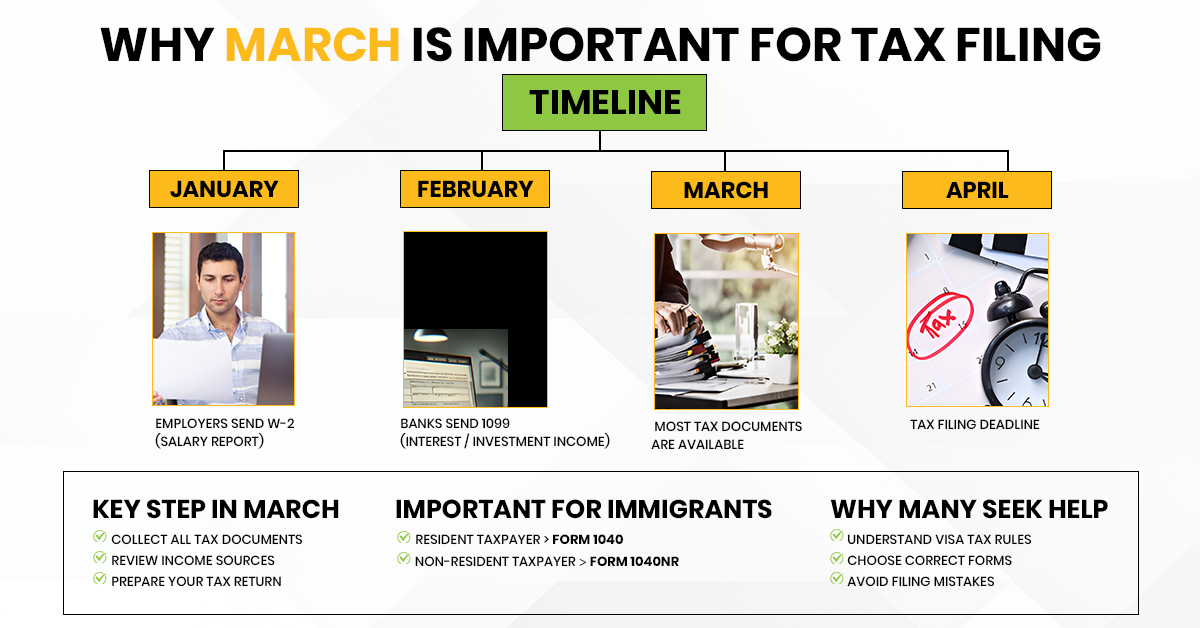
Mid-March is when many people pause and finally look at the tax documents sitting in their email or mailbox. If you are among the many Indians in the USA who work or earn income, this is the moment when tax filing becomes real. By this time, most employers have already sent wage statements, and most banks have already sent income reports. The challenge is understanding what these documents mean and how they fit into your tax return.
Many individuals who are new to the American tax system begin learning through trusted tax filing services that specialize in helping immigrants navigate the process. When you work with experienced tax consultants or a knowledgeable tax expert, you can understand the system clearly and avoid common filing mistakes.
This guide explains what you should review by mid-March if you received W2 income, 1099 income, or both.
The goal is simple. Help you understand your responsibilities, organize your documents, and complete your tax return confidently.
Why Mid-March Is an Important Time for Tax Filing
By the middle of March, most taxpayers already have the documents needed to prepare a tax return. Employers send wage records early in the year. Financial institutions send interest and investment statements soon after. By mid March, you should have nearly everything required for filing.
The IRS explains how the process works on the official tax filing page.
For Indians in the USA, tax filing may feel complicated because the system differs from that in India. Income may come from multiple sources, and each type of income can require a different reporting method.
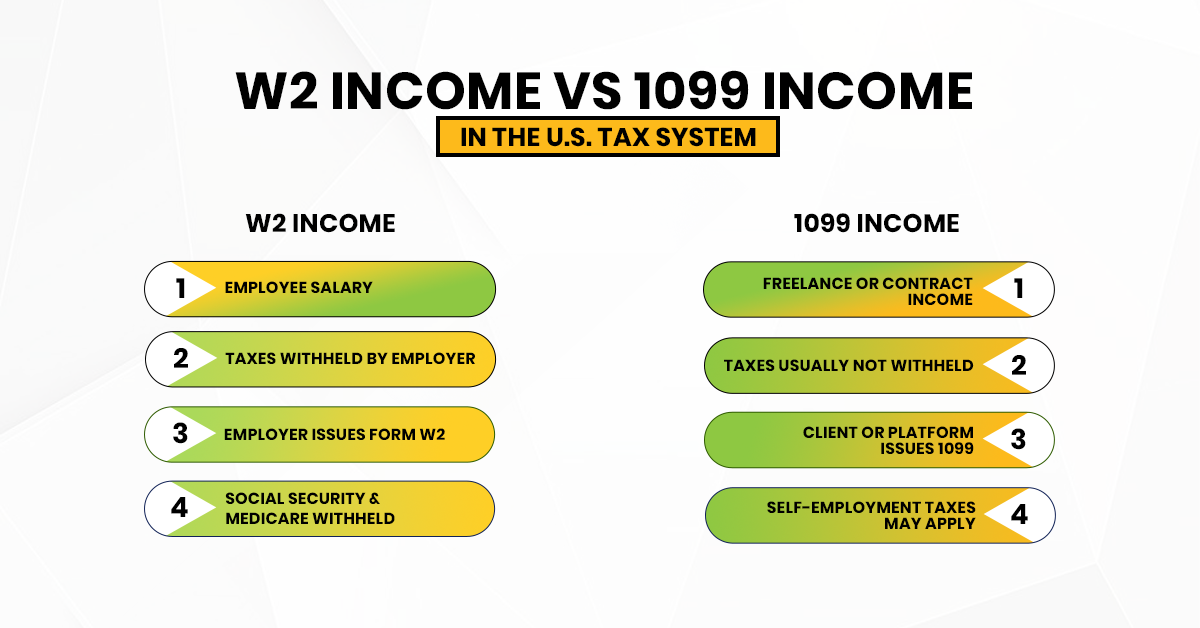
For example, salary income usually appears on a W2 form, while contract or freelance income may appear on a 1099 form.
Understanding how these forms work helps you prepare an accurate return.
Understanding W2 Income
Most employees working in the United States receive a document called Form W2. This form summarizes the wages you earned during the year and the taxes already withheld from your paycheck.
The IRS explains the document on the official Form W2 page.
The W2 includes details such as total wages, federal tax withheld, Social Security tax, and Medicare tax.
For many professionals working on employment visas or permanent residency, the W2 is the main document used when preparing a tax return.
If you worked for more than one employer during the year, you may receive more than one W2. Each form must be included in your return.
A skilled tax expert can review your W2 to make sure all information is correctly reported.
Understanding 1099 Income
Some people earn income outside of traditional employment. Freelancers, consultants, independent contractors, and investors often receive income reported through a 1099 form.
The IRS explains this document on the official Form 1099 page.
Different versions of the 1099 form exist. For example, banks may issue 1099 forms for interest income. Investment platforms may issue them for dividends or capital gains.
If you worked as an independent contractor, you may receive a different type of 1099 showing payments made for your services.
Many immigrants are surprised to learn that taxes are not automatically withheld from 1099 income. This means taxpayers are responsible for reporting the income and paying any tax owed.
Working with experienced tax consultants can help ensure this income is reported correctly.
Filing a Federal Tax Return
Once income documents are collected, the next step is preparing the federal tax return.
Most taxpayers file their return using the form described on the Form 1040 page.
The 1040 form summarizes all income earned during the year. It also calculates deductions, credits, and the final amount of tax owed.
For many taxpayers, the form includes income from multiple sources such as salary, interest, dividends, and contract payments.
Because tax rules may change each year, many individuals rely on professional tax services to ensure the return is prepared correctly.
Fill out the quick form to get personalized guidance from a tax expert.
Determining Tax Residency
One of the most confusing parts of the U.S. tax system involves determining tax residency.
Tax residency does not always match immigration status. Instead, it is determined by a rule called the substantial presence test.
The IRS explains this rule on the official presence test page.
If you meet the requirements of the test, you may be treated as a resident taxpayer. If not, you may be treated as a nonresident taxpayer.
This distinction is important because resident taxpayers usually report worldwide income while nonresident taxpayers typically report only U.S. income.
A knowledgeable tax expert can help determine which category applies to your situation.
Reporting Foreign Financial Accounts
Many Indians in the USA maintain bank accounts, investments, or assets in India. These financial accounts may trigger additional reporting requirements under U.S. law.
Two of the most important rules involve FATCA reporting and FBAR filing.
FATCA reporting requires taxpayers to disclose certain foreign financial assets. Information about these requirements is available on the official FATCA rules page.
FBAR filing requires individuals to report foreign bank accounts when their combined value crosses a specific threshold. Details are explained on the official FBAR rules page.
Many immigrants are unaware of these reporting rules and may accidentally overlook them.
Because these rules involve international finances, many individuals seek assistance from experienced tax consultants who specialize in cross-border tax compliance.
State Tax Filing Requirements
Federal tax returns are only part of the tax process. Many states require their own tax return as well.
Each state has its own rules regarding income reporting and deductions.
For example, someone living in California may need to file a California tax return in addition to the federal return.
Understanding these state requirements is important because failing to file a state return may result in penalties.
Many people prefer the best tax filing service to manage both federal and state returns together.
Reviewing Your Documents Before Filing
Mid-March is the perfect time to review all documents before submitting a return.
Start by confirming that you received all W2 forms from employers.
Next review any 1099 statements received from banks, investment platforms, or freelance clients.
If you maintain foreign bank accounts, review whether FBAR filing or FATCA reporting requirements apply.
Organizing these documents early helps avoid last-minute stress in April.
Common Mistakes During Tax Filing
Many taxpayers make similar mistakes during their first few years in the United States.
Some individuals forget to include interest income reported on 1099 forms.
Others overlook foreign bank account reporting requirements.
Some taxpayers also misunderstand residency rules and select the wrong filing status.
Even small mistakes can delay refunds or trigger IRS notices.
Working with experienced professional tax services helps prevent these errors.
The Importance of Professional Guidance
The American tax system contains many reporting rules that can feel overwhelming at first.
When you work with skilled tax consultants, you gain access to knowledge that simplifies the entire process.
A qualified tax expert can review your documents, verify your filing status, and ensure that all income is reported correctly.
For many Indians in the USA, working with professionals brings peace of mind during tax season.
Reliable tax filing services can also help identify deductions and credits that may reduce your tax liability.
Preparing for the Filing Deadline
The federal tax filing deadline usually arrives in April. Waiting until the final week often leads to unnecessary stress.
Mid-March is the ideal time to prepare your return, review your documents, and ensure all reporting requirements are met.
If additional time is needed, taxpayers may request an extension through the form explained on the official extension form page.
An extension allows more time to file the return, but taxes owed must still be paid by the original deadline.
Planning reduces pressure and ensures your return is filed accurately.
A Simple Approach to Tax Filing
Think of tax filing as organizing your financial story for the year.
Your W2 shows the salary you earned.
Your 1099 forms show income earned outside traditional employment.
Your tax return combines all income sources into one report submitted to the government.
Once you understand how each document fits together, the entire process becomes easier.
Frequently Asked Questions
Do Indians in the USA need to file taxes every year
Yes. Most Indians in the USA who earn income such as a W2 salary, 1099 freelance income, or investment income must file a federal tax return each year.
What is the difference between W2 and 1099 income
W2 income comes from an employer that withholds taxes from your paycheck.
1099 income usually comes from freelance work, consulting, or contract services, where taxes are not automatically withheld.
When should you start preparing your tax return?
Mid-March is a good time to prepare your return because most employers and banks have already issued W2 and 1099 forms by then.
Do Indians in the USA need to report foreign bank accounts
Yes. Many individuals must follow FATCA reporting and FBAR filing rules if they maintain bank accounts or financial assets outside the United States.
What happens if the FBAR filing is missed
Missing FBAR filing can lead to penalties. This is why many taxpayers work with a tax expert or experienced tax consultants who understand international reporting requirements.
Should immigrants use professional tax services?
Many immigrants prefer professional tax services because the U.S. tax system has complex reporting rules. A knowledgeable professional can help ensure accurate filing.
How do you choose the best tax filing service?
The best tax filing service is usually one that understands international tax rules and regularly helps immigrants or Indians in the USA with their tax returns.
Final Thoughts
Mid-March is an important moment for reviewing your tax situation and preparing your return. By this time, you should have the documents needed to complete your filing.
Understanding W2 income, 1099 income, and international reporting requirements helps you avoid common mistakes.
Many Indians in the USA choose trusted tax filing services that specialize in immigrant taxation. With guidance from experienced tax consultants, knowledgeable tax experts, and reliable professional tax services, you can complete your return confidently and stay compliant with U.S. tax laws while focusing on your work and future in America.
Crescent Tax Filing is an IRS-authorized e-file provider with 8+ years of experience, 85+ tax professionals, and over 27,000 expat tax filings completed with accuracy. Get expert help for U.S.–India cross-border tax compliance. Fill out the quick form to get personalized guidance from a tax expert.
Disclaimer: This article is provided for general educational purposes only and should not be considered tax advice. Tax rules may change, and individual circumstances may vary based on residency status, visa type, income sources, and foreign financial accounts. Readers should consult a qualified tax expert, experienced tax consultants, or trusted professional tax services before making decisions related to tax filing, FATCA reporting, or FBAR filing. Professional guidance can help ensure compliance with current U.S. tax regulations and avoid potential penalties.