
Top 5 Freelancer Tax Mistakes to Avoid in 2026
Imagine this scenario where you’ve just landed your biggest freelance client yet. The checks are rolling in, your portfolio looks incredible, and you’re finally living that work-from-anywhere dream. Then April arrives, and suddenly you’re staring at a tax bill that makes your stomach drop.
Sound familiar?
Here’s the thing about freelancer tax. It catches most people unprepared the first time around. Unlike your old 9-to-5, where taxes magically disappeared from your paycheck, freelancing puts you in the driver’s seat. And if you don’t know the rules of the road, you’re heading straight for a costly detour.
Whether you’re a graphic designer working with international clients, a writer crafting content for tech startups, or a consultant helping businesses grow, understanding how to file taxes as a freelancer or self-employed individual isn’t just smart, it’s essential. Using a reliable tax preparation service can save you from expensive mistakes and sleepless nights. The good news? Most errors are completely avoidable once you know what to watch out for.
Let me walk you through the five biggest tax traps that catch freelancers every single year, and more importantly, how you can sidestep them entirely.
Mistake #1: Why Ignoring Quarterly Taxes Can Wreck Your Freelancer Tax Planning
Freelancer tax planning is the mistake that hurts the most because it sneaks up on you slowly, then hits you all at once.
When you worked a regular job, your employer handled tax withholding automatically. As a freelancer, that responsibility falls squarely on your shoulders. The IRS expects you to pay taxes as you earn money throughout the year, not just on April 15.
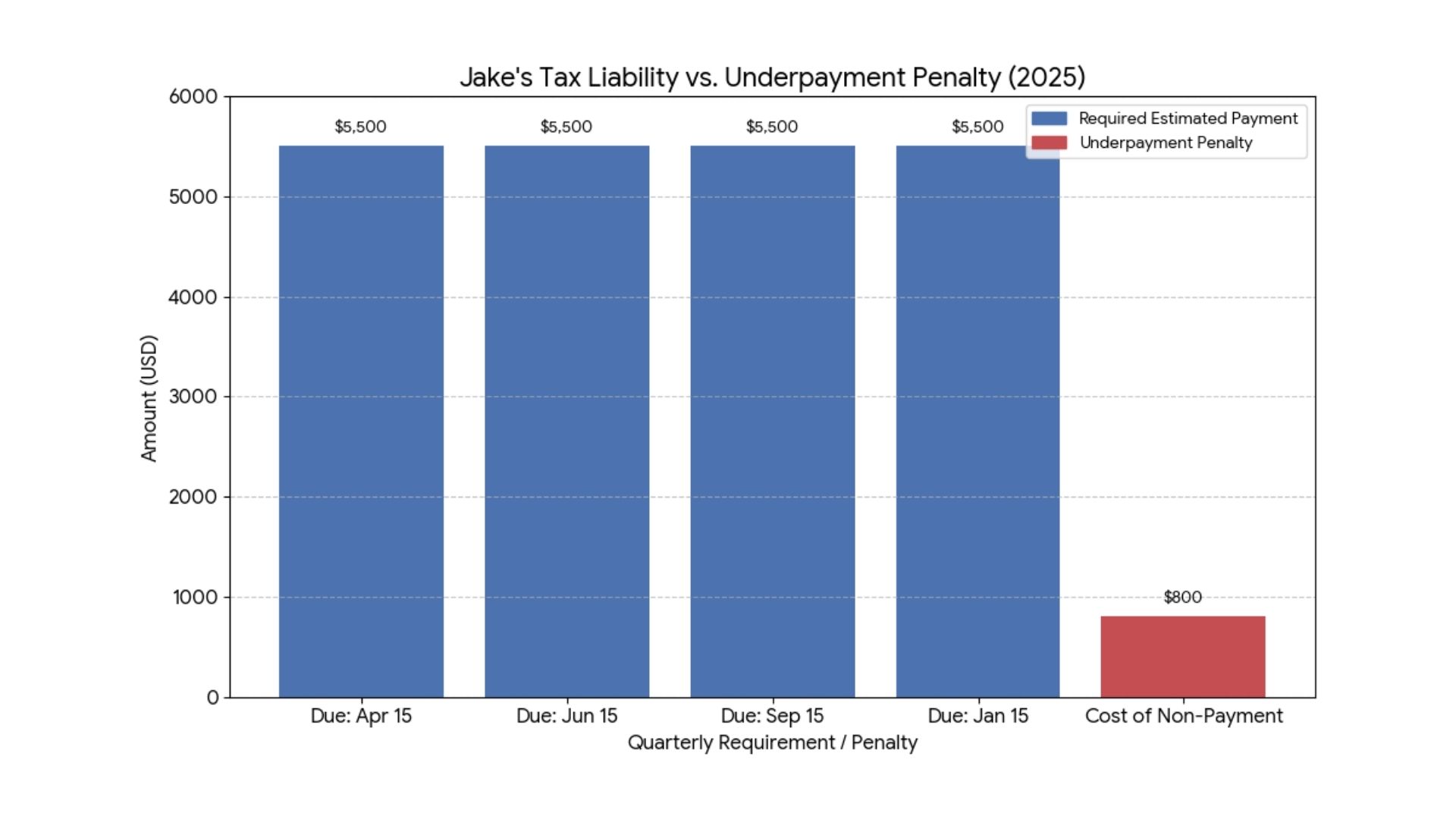
Here’s how it works. Quarterly estimated taxes are due four times a year; April 15, June 15, September 15, and January 15. If you expect to owe $1,000 or more when you file your return, you need to make these payments.
Meet Jake, a freelance web developer navigating the world of freelancer taxes: Jake started freelancing in January 2025 and made $85,000 his first year. He didn’t pay quarterly taxes because nobody told him he had to. When April 2026 rolled around, he owed $22,000 in taxes plus an underpayment penalty of nearly $800. That penalty alone could have paid for a nice vacation.
The penalty for missing quarterly payments stacks up fast. Even if you’re getting a refund when you file your annual return, you can still face penalties if you didn’t pay enough throughout the year. This is why U.S. Individual Income Tax Returns require you to plan for those quarterly tax payments.
How to avoid this mistake as you plan your freelancer tax:
Use Form 1040-ES to calculate your estimated tax payments. A simple rule of thumb? Set aside 25-30% of every payment you receive. Open a separate savings account just for taxes, and transfer money there immediately when clients pay you.
Download the form, work through the worksheet, and set calendar reminders for each quarterly deadline. Many freelancers find that paying monthly instead of quarterly makes the amounts feel more manageable and keeps them from spending money they’ll owe later.
Mistake #2: Why Mixing Personal and Business Expenses Can Blow Up Your Freelancer Taxes
This mistake seems innocent at first. You buy lunch using your personal credit card but it was a client meeting, so it’s deductible, right? You use your personal car for business errands. Your home internet supports your freelance work.
Before you know it, your personal and business finances are tangled together like last year’s holiday lights.
The IRS hates this. When your finances are mixed, it’s nearly impossible to prove which expenses are legitimate business deductions. During an audit, this commingling of funds raises red flags and can lead to disallowed deductions and penalties.
Maria, a freelance photographer, admits she totally messed up her freelancer taxes before she knew what she was doing: Maria used her personal checking account for everything, client payments, equipment purchases, her Netflix subscription, groceries, you name it. When she tried to do her taxes, she spent three weeks sorting through bank statements, trying to figure out which charges were business-related. She ended up missing several deductible expenses and overpaid by nearly $2,000.
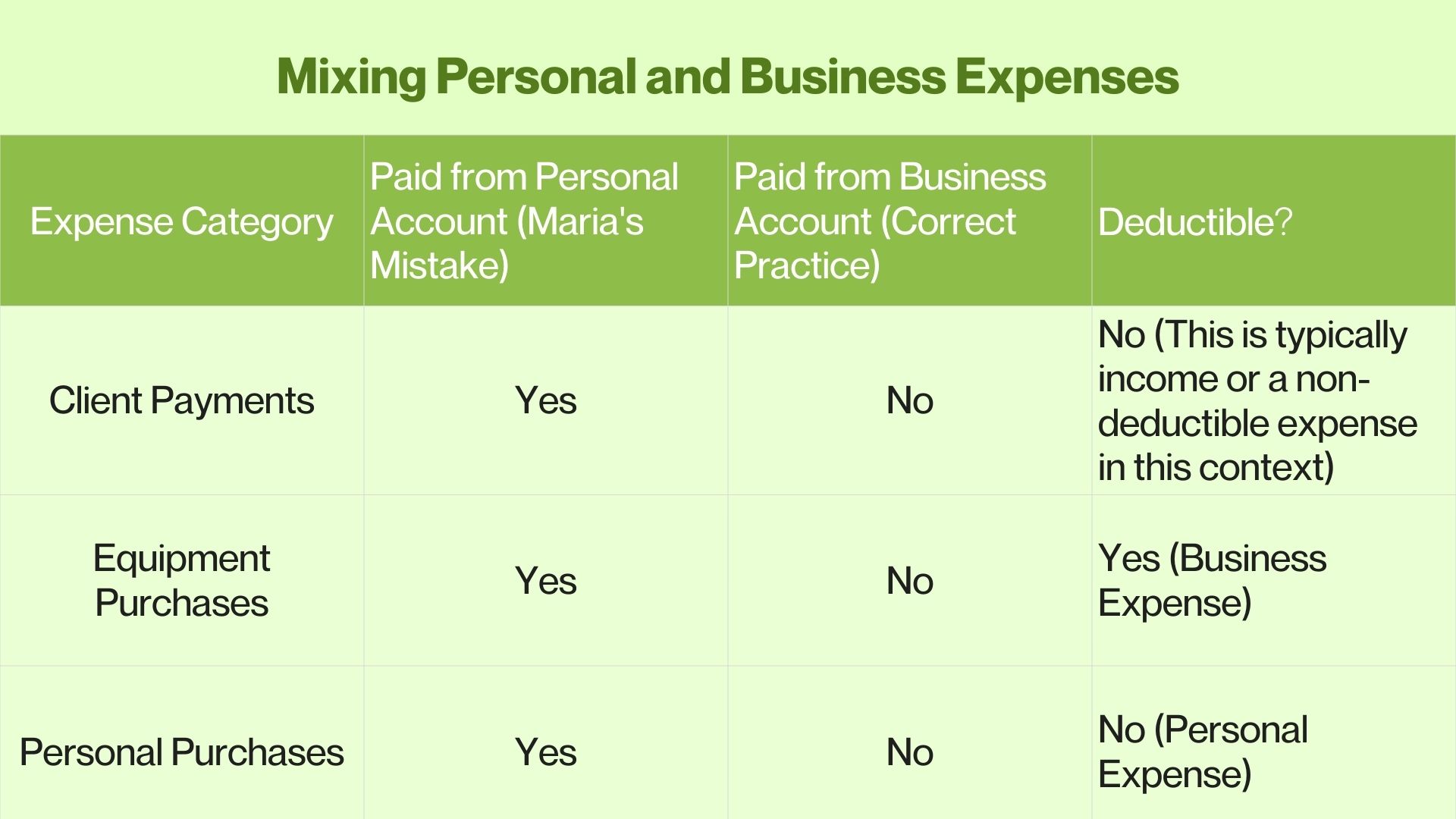
How to fix this freelancer tax issue:
Open a separate business checking account this week. It doesn’t have to be fancy; a simple no-fee business account from your local bank works perfectly. Get a business credit card while you’re at it.
From this point forward, all business income is deposited into that business account, and all business expenses are paid from it. Personal stuff stays completely separate. This clean separation makes bookkeeping infinitely easier and protects you during audits.
Keep receipts for everything. Take photos with your phone and store them in a cloud folder organized by month. Apps like Expensify or QuickBooks Self-Employed can automate this entire process.
Mistake #3: The Freelancer Tax Mistake of Missing Out on Legitimate Deductions
This mistake costs freelancers thousands of dollars every single year, and the worst part? You’re literally leaving your own money on the table.
The IRS allows you to deduct ordinary and business expenses resources. That means anything you spend to earn your freelance income can reduce your taxable income. But here’s the point if you don’t track it and claim it, you lose it.
Treating Freelancer Taxes Like They’re Optional:
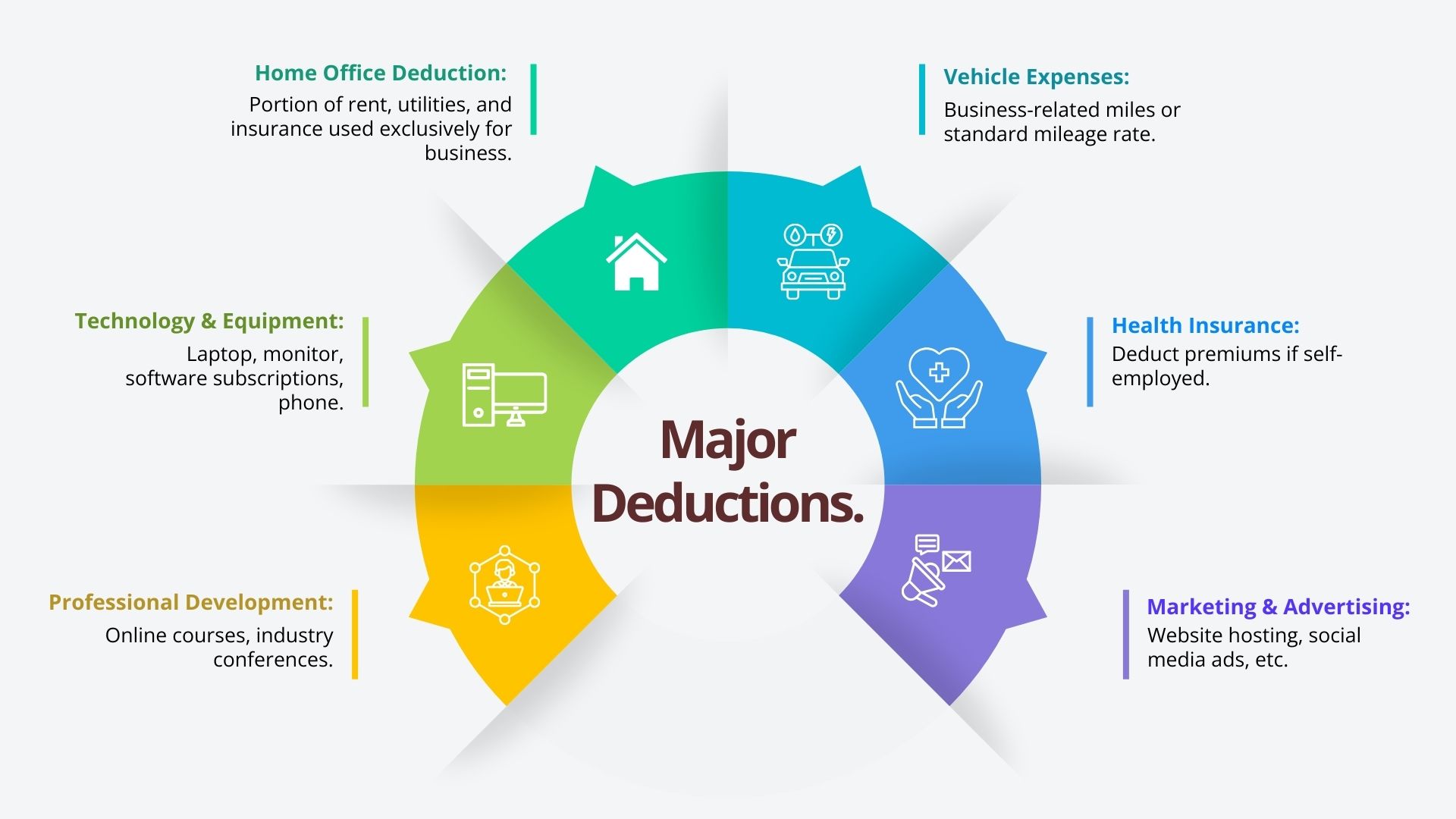
Home office deduction: If you have a dedicated space in your home used exclusively for business, you can deduct a portion of your rent, utilities, internet, and renters’ insurance. You don’t need a separate room, even a designated corner of your bedroom counts if it’s used only for work.
Technology and equipment: Your laptop, monitor, software subscriptions (Adobe Creative Cloud, Microsoft Office, project management tools), phone, and printer are all deductible.
Professional development: Online courses, workshops, industry conferences, professional association memberships, and business books; these all count as deductible expenses.
Health insurance: If you’re self-employed and pay for your own health insurance, you can deduct 100% of your premiums. This is an above-the-line deduction, which means you get it even if you don’t itemize.
Vehicle expenses: If you drive for business purposes (not commuting from home to a regular workplace), you can deduct either actual expenses or use the standard mileage rate. For 2026, track every business mile, client meetings, office supply runs, bank deposits, and networking events.
Professional services: Fees paid to accountants, lawyers, business coaches, and other professionals who help your business.
Marketing and advertising: Website hosting, domain names, business cards, social media ads, portfolio sites, all deductible.
The key is documentation. The IRS doesn’t care that you spent money on business expenses. They care that you can prove it. Keep detailed records of every purchase, including receipts, invoices, and notes about the business purpose.
Mistake #4: Why Freelancers Can’t Afford to Forget Self-Employment Tax
Here’s a shock that hits every new freelancer: you’re not just paying income tax anymore. You’re also paying self-employment tax, which covers your Social Security and Medicare contributions.
When you were an employee, your employer paid half of these taxes (7.65%), and you spent the other half through payroll deductions. As a freelancer, you pay both halves a total of 15.3% on your net earnings.
This is calculated under Schedule SE and is in addition to your regular income tax. So if you’re in the 22% tax bracket, you’re actually looking at closer to 37% total tax liability (22% income tax + 15.3% self-employment tax, though there’s a small deduction that brings it down slightly).
How to Handle Freelancer Tax Correctly:
First, understand that this is just the cost of being your own boss. The flexibility and freedom of freelancing come with this responsibility.
Second, remember you can deduct half of your self-employment tax when calculating your adjusted gross income. This softens the blow a bit.
Third, calculate your total tax liability, including self-employment tax when you’re setting aside money. This helps you avoid nasty surprises.
Finally, consider your business structure. Once you’re earning consistently high income, an S-Corp election might save you money on self-employment taxes. This is something to discuss with a tax professional when your freelance income crosses $60,000-$70,000 annually.
Mistake #5: The Freelancer Tax Mistake of Waiting Until Tax Day to Think About Taxes
This might be the most dangerous mistake of all because it compounds every other mistake on this list.
If you wait until April to deal with your taxes, you’re setting yourself up for stress, mistakes, and missed opportunities. Tax planning isn’t a once-a-year event; it’s an ongoing process that should happen monthly, if not weekly.
What Happens When You Procrastinate on Freelancer Tax:
You scramble to find receipts and documentation, often missing valuable deductions because you can’t find the paperwork. You make calculation errors when you’re rushing. You might miss the filing deadline entirely and face penalties. You lose opportunities for strategic tax planning that could have saved you money.
The Better Approach to Freelancer Tax:
Spend one hour at the end of each month reviewing your finances. Categorize expenses, make sure all receipts are saved, confirm your estimated tax payments are on track, and review your income projections.
Set up a simple spreadsheet or use accounting software to track income and expenses throughout the year. When tax season arrives, you’ll have everything organized and ready to go.
Professional guidance from someone who specializes in freelancer tax and self-employed individuals makes a huge difference. The fees you pay are deductible, and expert help typically saves you more money than it costs.
Five Quick Answers About Freelancer Taxes
How to file taxes as a freelancer in the USA in 2026?
File Form 1040 along with Schedule C to report business income and expenses, and Schedule SE for self-employment tax. You’ll need all your 1099 forms and documentation of business expenses. Consider using tax software designed for self-employed individuals or working with a tax professional.
How to do taxes as a freelancer?
Track all income and expenses throughout the year, make quarterly estimated tax payments, separate personal and business finances, and file your annual return using Schedule C. Keep detailed records and receipts for all business-related expenses to maximize your deductions.
How do I file taxes as a freelancer?
Start by organizing your income records and expense receipts. Calculate your net profit, complete Schedule C and Schedule SE, then integrate this information into your Form 1040. File electronically through IRS Free File, tax software, or with help from a tax professional.
How to file freelancer tax?
Gather your 1099-NEC forms and income records, document all business expenses, fill out Schedule C to calculate net profit, use Schedule SE for self-employment tax, and submit Form 1040 by the April 15 deadline. Don’t forget quarterly estimated payments throughout the year.
What’s the difference between freelancer tax and regular tax?
Freelance taxes include both income tax and self-employment tax (15.3% for Social Security and Medicare). You’re responsible for making quarterly estimated payments and can deduct business expenses. Regular employees have taxes withheld automatically and don’t pay self-employment tax directly.
Take Control of Your Freelance Finances with Better Freelancer Tax Management
The freedom of freelancing is incredible: choosing your clients, setting your rates, and working from anywhere. But with that freedom comes responsibility, especially when it comes to taxes.
The mistakes we’ve covered today trip up thousands of freelancers every year. What is the difference between those who struggle with tax problems and those who handle them smoothly? Preparation and knowledge. Additionally, tax filing services are invaluable.
Start today by opening that separate business account. Set up your tax savings fund. Create a simple system for tracking expenses. Mark your quarterly payment deadlines on your calendar. These small steps now will save you massive headaches later.
Your freelance business deserves the same attention and care you give to your clients’ projects. When you get your tax situation under control, you can focus on what you do best: growing your business and serving your clients.
Disclaimer: This article is for informational purposes only and does not constitute tax, legal, or financial advice. Please consult a qualified tax professional regarding your specific situation.